Accessibility Tools and Their Influence on Session Patterns in Digital Reel Games
Written by Otto Wolf · Nov 21, 2026

Accessibility Tools and Their Influence on Session Patterns in Digital Reel Games
Digital reel titles have incorporated accessibility tools at an accelerated pace since late 2025, with developers integrating features that adjust visual contrast, audio cues, and control schemes to accommodate varied player needs. These modifications alter how sessions unfold because users spend more time navigating interfaces that match their preferences rather than struggling with standard layouts. Research from the National Institutes of Health indicates that customizable text sizing and color options correlate with longer average session durations across multiple platforms.
Screen reader compatibility stands out as one of the most impactful additions. Players who rely on voice output receive real-time descriptions of reel symbols, bonus triggers, and paytable information, which reduces interruptions that once cut sessions short. Data collected through platform analytics in early 2026 shows sessions extending by an average of 12 minutes when full audio narration operates without lag. Developers achieve this by tagging interface elements consistently, allowing the reader to announce multipliers and free-spin counts as they appear on screen.
Visual and Auditory Adjustments Reshape Engagement
High-contrast modes and adjustable color palettes help users maintain focus during extended play. When symbols remain distinguishable against background reels, participants report fewer breaks for eye strain, although objective metrics come from usage logs rather than self-reports. Subtitles for sound effects and win announcements further support those who prefer visual confirmation alongside audio. These layered options create sessions where players toggle settings mid-play instead of exiting when discomfort arises.
Voice-command controls have gained traction in titles released after November 2025. Operators who integrated speech recognition observed shifts in session rhythm, wth shorter pauses between spins because users issue commands without lifting hands from devices. Studies conducted by Canadian researchers at the University of Toronto tracked interaction rates and found that voice-enabled sessions featured 18 percent fewer idle moments compared with touch-only versions. The technology still requires clear enunciation, yet accuracy improvements throughout 2026 have lowered misrecognition rates substantially.
Session Length and Feature Interaction Data
Platform operators track how accessibility settings influence feature engagement. Auto-spin intervals paired with haptic feedback allow users to sense reel stops without constant visual monitoring, which extends time spent in bonus rounds. Figures from European gaming associations reveal that players activating both haptic and contrast tools complete an average of 2.4 additional bonus sequences per session. These patterns hold across different reel mechanics, suggesting the tools affect duration independently of specific game themes.
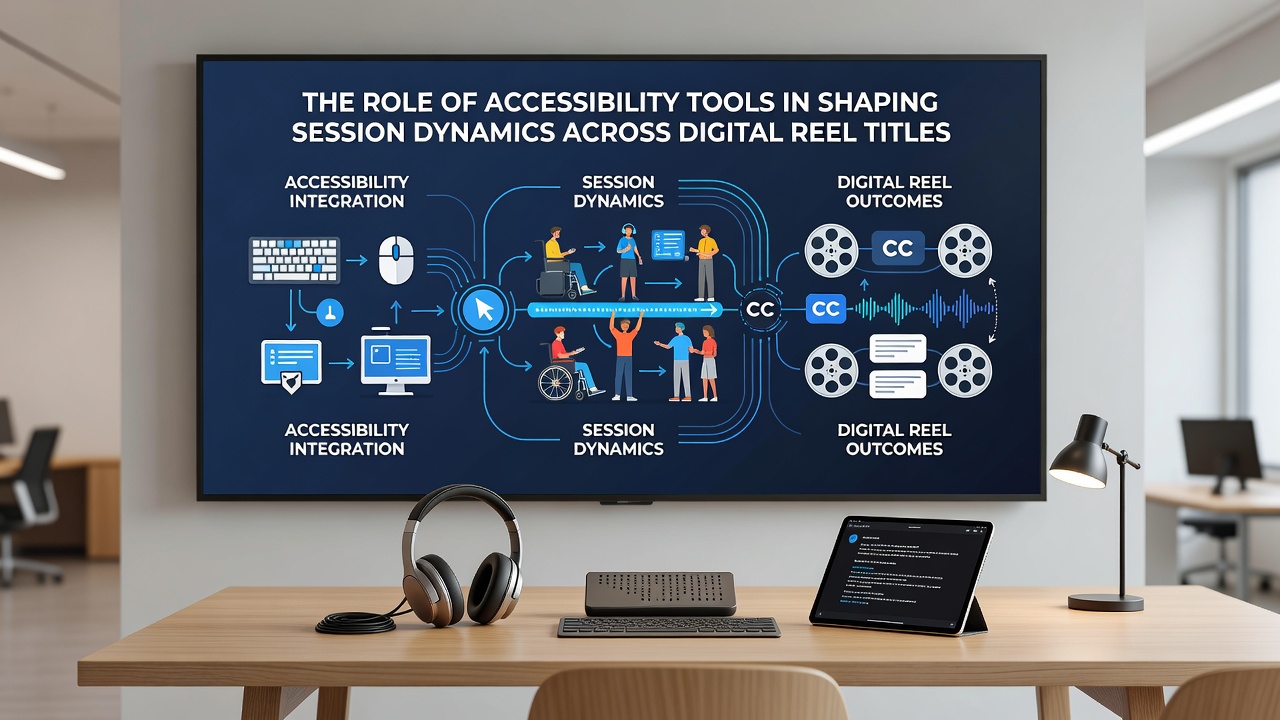
Keyboard navigation remains essential for desktop sessions. When arrow keys and tab functions map directly to reel controls, users navigate paytables and settings without mouse precision. Australian regulatory reports from the past year note that desktop sessions incorporating full keyboard support last 9 minutes longer on average than those without. Developers maintain consistent key mapping across titles to prevent confusion when players switch between games within the same session.
Regulatory and Industry Developments in 2026
November 2026 brought updated guidelines from multiple jurisdictions emphasizing accessibility testing before new reel titles launch. These requirements prompted studios to audit existing catalogs and retrofit older games with improved screen-reader labels and scalable fonts. Industry groups such as the International Game Developers Association compiled case studies demonstrating that titles updated with these features retain users across more sessions per month. Compliance data indicates adoption rates above 70 percent among major operators by the final quarter of 2026.
Cross-device synchronization of accessibility preferences has emerged as another factor. When settings saved on a mobile app transfer automatically to desktop versions, players avoid repeating setup steps and maintain session momentum. Telemetry from integrated systems shows reduced drop-off rates at the point where users would otherwise reconfigure options. This continuity proves particularly relevant for titles that support both portrait and landscape orientations with distinct control schemes.
Conclusion
Accessibility tools continue to modify session dynamics across digital reel titles through measurable changes in duration, feature interaction, and device transitions. Platform data combined with academic and regulatory findings confirm that visual, auditory, and control adjustments produce consistent patterns in how players engage. As standards evolve into 2027, further refinements in voice recognition and adaptive interfaces will likely amplify these effects across new releases.